
The San Sebastián Festival, the Basque National Orchestra and the SGAE Foundation return to the Velodrome with a film and music extravaganza

The Basque National Orchestra, the Orfeón Donostiarra choir, Andoni Martínez Barañano and the conductor Juan José Ocón will make up the team of this latest edition, to take place on Saturday 19 September at 18:00.
‘Verano Azul / Blue Summer’ and ‘La clave’ de Carmelo Bernaola; ‘El cantor de México’ and ‘El amor es como un ramo de violetas’, with tenor Andoni Martínez Barañano rendering the voice of Irun’s Luis Mariano; ‘Winnipeg, the Seed of Hope’ and ‘Sacamantecas / The Harvester’ are some of the chosen works.
The conductor of the Basque National Orchestra Juan José Ocón will once again take up the baton for this hugely popular combination of films and their music. The concert will open with the soundtrack familiar to a whole generation, created by Carmelo Bernaola for Verano Azul / Blue Summer, Tormento / Torment, El jorobado de la morgue, La clave and Espérame en el cielo / Wait for Me in Heaven. The proceedings will continue with Papeles by the composer Carla F. Benedicto; Sacamantecas / The Harvester by Beatriz López-Nogales; Winnipeg, the Seed of Hope by Diego Navarro; and Evolution by Alfred Tapscott; ending with the operettas El cantor de México and El amor es como un ramo de violetas by Francis López, the two works that brought fame to the singer from Irun Luis Mariano and whose voice will be rendered by the singer from Getxo, Andoni Martínez Barañano. For this latest concert, the Basque Orchestra has invited the Orfeón Donostiarra choir to perform on several numbers: Winnipeg, Evolution, el Cantor de México and Violetas imperiales.
Like in previous years, the concert will have an added visual slant: the music will tie in with the showing, on the 400m2 screen, of a montage of scenes from the films, specifically created for the concert by the Morgancrea team. In addition, the composers will attend the concert and take to the stage of the Velodrome to introduce their work.
Entry is free, although invitations must be collected, from 12-18 September, from the San Sebastián Festival information point at the Kursaal or the Donostia Turismo office (Calle Ijentea, 1), Monday-Sunday, 09:00-20:00. If invitations are still available, they can also be collected from the Velodrome ticket office on the same day of the concert, from 16:00.
The Basque National Orchestra with the Festival
Over the years, the Basque National Orchestra has repeated its presence at the San Sebastián Festival in different ways. One of the most notable was the 2012 edition, when the orchestra performed the complete soundtrack of Juan Antonio Bayona’s world-famous film Lo imposible / The Impossible, with a score penned by Fernando Velázquez. From the following year, 2013, the orchestra started to offer a live concert of film music, first of all at its Miramón headquarters, and, from 2015, on the enormous stage of the Velodrome, the venue still used today. In this decade of film music concerts, the orchestra has performed the soundtracks of feature films including Handia (Giant), Errementari (The Blacksmith and the Devil), Arrugas (Wrinkles), Pájaros de Papel (Paper Birds), The Oxford Murders, Tadeo Jones 2 (Tad, the Lost Explorer), Mientras dure la guerra (While at War), Buñuel en el laberinto de tortugas (Buñuel in the Labyrinth of the Turtles)… During this time, the Basque Orchestra has performed and drawn attention to more than 70 soundtracks from our films. It is also worth noting that the orchestra recorded the Festival soundtrack in its 1991 and 1992 editions.
In addition to its consolidated collaboration with the San Sebastián Festival, the Basque National Orchestra can boast several involvements in film music. Particularly interesting are the soundtracks for Patria and Maixabel, as well as a few earlier recordings, such as that of A Monster Calls —with which Fernando Velázquez won the Goya for Best Original Song in 2016, Ocho Apellidos Vascos (A Spanish Affair), Contratiempo (The Invisible Guest), Submergence, Momias / Mummies, etc.
The SGAE Foundation with the cinema
Since 2012, the SGAE Foundation has been co-organising the non-competitive Made in Spain section, showcasing a selection of Spanish films made in the last year, whether or not they have had their release, to which the Festival provides an excellent platform for their international dissemination. These works will screen from 22-26 September at the Sala Berlanga in Madrid.
For its part, the Territorial Council of the SGAE in the Basque Country supports the GIDOI-SGAE Award going to the Best Basque Screenplay, given annually by the Professional Association of Screenwriters of the Basque Country and which will be presented at the EITB Basque Cinema Gala on 22 September. The list of winners in other years includes acclaimed Basque screenwriters such as Enrique Urbizu, José Mari Goenaga, Aitor Arregi, Maider Oleaga, Marina Parés, Telmo Esnal, Iñaki Rikarte, David Pérez-Sañudo and Borja Cobeaga.
For the first time, the foundation created by the Spanish Society of Authors and Publishers (SGAE) gives the SGAE Award for Best Original Music going to the score of one of the 17 films competing in the Festival’s Official Selection. This award is yet another example of the close collaboration maintained by the festival and the SGAE Foundation for more than a decade, recognising “the excellence of the original music composition and its artistic contribution to the cinematographic work as a whole”. The award will be presented at the Festival’s closing gala and will honour the field of film music composition for the first time.
More information
Concert informationSeason 26/27

The Symphony Season comprises unique projects such as the revival of Aita Donostia’s ‘La vie profonde de Saint François D’Assise’, a presentation of Bach as a source of inspiration, America as a reflection of folk tradition and rhythmic energy, and Mahler and his monumental musical architecture.
To enable this symphonic programme, the orchestra will be joined by 9 internationally renowned conductors, 6 instrumental soloists and 3 voice soloists and 4 major local.
Basque culture will be well represented in the programme with compositions by Aita Donostia, Sanjuán, Ozaita, Sorozábal and Guridi, whose ‘Ten Basque Melodies’ will mark the 90th anniversary of the first Basque Government; and also in the performing arts with the voices of Jone Martínez, Luken Munguira, Orfeón Donostiarra, Coro Easo, Easo Gazte and Sociedad Coral de Bilbao
The orchestra will undertake the first symphonic recording of the composer from Vitoria, José María Sanmartín, on the 50th anniversary of his death, and will release the album of the seminal work by Navarran composer Pascual Aldave, ‘Akelarre’.
The Basque National Orchestra will be present for the first time at the International Music and Dance Festival of Granada in June 2027.
SYMPHONY SEASON PROGRAMMING
The Basque National Orchestra 2026/2027 Symphony Season will begin on 25 September 2026 in Bilbao and will conclude on 31 May 2027 in Pamplona. It will feature a total of 10 programmes which, divided between Vitoria (10), Bilbao (10), San Sebastian (10x2) and Pamplona (10), will mean a total of 50 concerts during the Symphonic Season alone.
The new image of the Season and all those accompanying it will feature a new narrative language, designed from a digital perspective, lending prominence to its audiovisual format. For the 26/27 season, we will use vibrations as our graphic concept, bringing that effect of rhythm or frequency – which alters shapes, creates repetitions and produces waves and resonances – into the visual realm. This resource has enabled us to create engaging arrangements linked to the themes, works and composers featured in each programme. This graphical tour will be led by ACC Comunicación.
Major programme themes: A Season to vibrate with
This new season will take us on a journey through the great questions surrounding the human condition: life and death, destiny, hope, memory, identity and freedom. A journey from the spirituality of Gustav Mahler to the political tension of Dmitri Shostakovich; from Bach’s universe of sound to the modernity of Stravinsky; from the Basque musical heritage of Aita Donostia and Jesús Guridi to the Latin American vitality of Pacho Flores.
In this musical overview of the Season, we will be thrilled by the revival of La vie profonde de Saint François D’Assise, which Aita Donostia premiered in Paris in 1926, 100 years ago. As the epicentre of the avant-garde movement, the French capital brought together other contemporary composers such as Falla and his friends, Debussy and Stravinsky, whose programme will demonstrate how they were three fundamental pillars of the musical renewal of the 20th century. Another cornerstone of musical architecture leads us to Bach — both as a starting point and as a source of inspiration—where seven composers from the 19th and 20th centuries reinvent the German genius’s technical perfection, breathing new life into it. A leap in time transporting us to the America of the Venezuelan Pacho Flores and is virtuoso trumpet playing, delighting in stories of flowers, tangos, song and turnabouts.
After many years, two leading figures in the world of the piano and contemporary music history are returning to the season: Christian Zacharias, who will perform as both pianist and conductor, and Elisabeth Leonskaja. The seasoned experience of these great artists will stand in stark contrast to the promising youth of the tenor Luken Munguira, risen through the ranks of the choir, and Jone Martínez, already well established with a distinguished international career. Voices that will give way to others and bring to life the great choral ensemble comprising the Orfeón Donostiarra, the Coro Easo and the Sociedad Coral de Bilbao. Others, these anonymous, will shape a new choir for the third editions of Abestu Euskadiko Orkestrarekin.
The Basque essence
The Basque National Orchestra emerged in a society in which music was a shared good, a rich heritage the orchestra guarded while undertaking to disseminate and foster its development. In keeping with this mission, the orchestra will include a total of seven Basque composers throughout the Season: five for the symphonic section and two in the recordings. We talk of Aita Donostia, Guridi, Sanjuán, Sorozabal, Aldave, Sanmartín y Ozaita, most from the end of the late 19th and early 20th centuries, who witnessed the European avant-garde centred on Paris.
- From Aita Donostia we will recoup his most ambitious work, La vie profonde de San Francisco D´Assise, which premiered in Paris in 1926, 100 years ago.
- Jesús Guridi’s Ten Basque Melodies will mark the 90th anniversary of the first Basque Government (1936–2026). Premiered in 1941, it is one of the most iconic works in the Basque repertoire. The Basque National Orchestra has performed this work on numerous occasions and its sixth melody, ‘Amorosa’, has virtually become its anthem during its international tours.
- Pedro Sanjuán emigrated to South America and spent a large part of his life in Cuba. Because of this his emergence, with Liturgia Negra is surprising. Babaluayé, in a symphonic programme entitled Amerika and brimming with popular Latin American influences such as tangos, songs and revueltas.
- The Basque National Orchestra will bring this Symphonic Season to a close with Siciliana by María Luisa Ozaita, on the tenth anniversary of the death of this composer, pianist, harpsichordist, musicologist and a pioneer in championing music composed by women.
- Pablo Sorozabal will again play a leading role in the programme’s Basque repertoire, Abestu Euskadiko Orkestrarekin in its third edition. On this occasion, the choir of anonymous voices will bring us Hara nun diran, a work created and sung by José María Iparraguirre in a version by Pablo Sorozabal.
- José María Sanmartín and Pascual Aldave hold a notable place in the Season’s discographic aspect. The revival of the work of the Vitoria-born composer Sanmartín will mark a valuable rediscovery of an artist who has been unjustly consigned to oblivion, whilst we await with great anticipation the release of Pascual Aldave’s recording of Akelarre, which has already been recorded.
The tenor Luken Munguira, soprano Jone Martínez, the Orfeón Donostiarra, the Coro Easo and Easo Gazte and the Sociedad Coral de Bilbao, together with the choir Abestu Euskadiko Orkestrarekin, embody the living Basque essence of the Season. Their participation reflects the orchestra’s commitment to Basque culture, to those who enrich and advance it every day, and to a society that finds in its music one of its most valuable forms of expression.
And equally important is the participation of Juanjo Mena, who will conduct the Basque National Orchestra as part of the Musical Fortnight in the Victoria Eugenia Theatre.
Artists
The orchestra will once again receive a good number of artists in its programme: nine conductors, six instrumental soloists and ten vocal soloists, as well as four choirs. This will bring together the international music elite with the musical virtuosity and budding careers our orchestra fosters.
CONDUCTORS
Two female conductors head the list of those who will occupy the podium for the first time: Marzena Diakun and Delyana Lazarova. Also seeing their debut are Paul Goodwin and Philipp Von Steinaecker. And we again welcome Lucas Macías (first time at the Symphonic Season, conducting twice), Ernest Martínez Izquierdo, Manuel Hernández-Silva, Christian Zacharias and Pablo González.
INSTRUMENTAL SOLOISTS
This season we will be joined by two leading figures from the world of the piano and the history of contemporary music, who are returning to perform with the orchestra: Christian Zacharias, who will appear as both pianist and conductor, and Elisabeth Leonskaja. Another piano soloist is Josu de Solaun. Violinist Akiko Suwanai is among the finest currently. And the Venezuelan Pacho Flores will prove he is one of the finest trumpeters in the world, accompanied by Marcel Montcourt and the Venezuelan quartet.
VOICE SOLOISTS
Vocalists will include the soprano Jone Martínez from Biscay, the mezzo-soprano Nadezhda Karyazina and the tenor Luken Munguira.
CHOIRS
The choral element will be key to truly experiencing these great musical works: the Orfeón Donostiarra will play an essential role in the Season’s opening concert with its performance of Mahler’s Second Symphony, one of the most impressive works in the symphonic-choral repertoire. The Easo and Easo Gazte choirs will recover for us La vie profonde de Saint François D’Assise by Aita Donostia. The Bilbao Choral Society has set aside a programme of works by Brahms that links the profound melancholy and reflection on death found in ‘Nänie’ (Funeral Song) with the serene and heroic acceptance of life in ‘Schicksalslied’ (Song of Destiny).
In addition, the Abestu Euskadiko Orkestrarekin choir in its third appearance will move us with the ‘Coro de románticos’ from the zarzuela Doña Francisquita, Hara nun diran by Sorozabal and with a subtle reference to Verdi, O signore, dal tetto natío from the opera I Lombardi.
Principal conductor
Throughout the 25/26 Season, we have worked intensively on appointing a new principal conductor for the coming years, and we will be in a position to announce the appointment in the next months. The Basque National Orchestra is in excellent form, as shown by the success of its symphonic concerts, backed by positive reviews from music critics and strong audience attendance. With our announcement of the new Principal Conductor we will again boost the path of the Basque National Orchestra.
OTHER ACTIVITIES OF THE ORCHESTRA
The work of the Basque National Orchestra goes well beyond the Symphonic Season and each Season offers over 140 activities in total. Let us highlight some of the most notable projects for the Season 26/27.
Visit to Granada in June 2027
The International Music and Dance Festival is one of the most characteristic cultural gatherings in Granada, held in the Alhambra palaces and chief monuments and spots of the city. Leading figures on the international scene have taken part in this festival, which remains a benchmark at European level. And the Basque National Orchestra will be there on 26 June 2027, at 10.00 pm at the Carlos V Palace in the Alhambra.
Recordings
Another important cornerstone of the orchestra's activity is its recordings, with more than 80 volumes, mainly centred on Basque creations.
José María Sanmartín was a Vitoria-born pianist and composer whose outstanding musical career had been largely forgotten. Fifty years after his death, the Basque National Orchestra will bring Sanmartín back into the spotlight with a recording of some of his symphonic works. Furthermore, in a clear tribute to his career, the RTVE Symphony Orchestra – where he was principal pianist until his sudden death – and the Basque National Orchestra will take part in an exchange at the start of the 27/28 season, and both ensembles will perform *Suite arabarra*, the work that won him the National Music Prize in 1963.
The year 2024 marked the centenary of the birth of one of the most important symphonists of 20th century Basque music: Pascual Aldave. Over the past two years, the Basque National Orchestra has striven to revive, perform and record what is regarded as his magnum opus, *Akelarre*. This first recording will be presented during the Season and its recording will be a historic milestone, leaving an important legacy in the Basque compositional catalogue.
In addition, the Basque National Orchestra, in conjunction with EITB, will continue to record videoclips with Christmas carols.
Other cycles and projects
The orchestra's Matinées de Miramón and Musika Gela cycles will be presented at a later date.
The orchestra will maintain its commitment to the ABAO Bilbao Opera Season, Musika-Música in Bilbao, the Gala of the BBVA Foundation Frontiers of Knowledge Awards Gala, San Sebastian Musical Fortnight, Zinemaldia, the members Concert of the Orfeón Donostiarra and the Christmas Concert of the Diario Vasco.
ARTIS+, art for social inclusion
ARTIS+, art for social inclusion, seeks to reinforce the role of culture in population groups at risk of exclusion for reasons of disability or social exclusion. It will run for three years, 2024 - 2026, and the Basque National Orchestra is committed to integrating the goals of this project throughout its different cycles: Matinées de Miramon, Musika Gela and the Symphonic Season. ARTIS+, is a cooperation project that takes the Pyrenees as its mainstay and is developed between the south of France, the Basque Country and Catalonia.
In its first two editions have featured numerous activities such as Abestu Euskadiko Orkestrarekin, Musika tantak, Logelan logale and Musikazaleak. And via these. between the participants and the public, this initiative has been shared by almost 20,000 people. New projects will continue the third and final year to continue growing in a more inclusive society.
SEASON AND REGULAR TICKETS
Season ticket sales from 1 July onwards
After the renewal period for current season ticket holders, the sale of new season tickets will open. This will be from 1 1 July via euskadikoorkestra.eus or by calling 943 01 32 32. Season tickets will be in order of receipt and subject to availability. The price of season tickets for 10 concerts in this new Season ranges between €87 and €252.
Single tickets will be on sale from 1 September
All tickets will be on sale from 1 September at euskadikoorkestra.eus and at the auditoriums' websites and ticket offices (except in Vitoria). Single ticket prices range from €10 to €41. The application of discounts for different groups is maintained and is one of the categories that works best: Last Minute Youth, tickets at €10 in all areas, for under 30s and from 30 minutes before the concert.
ACKNOWLEDGMENTS
Lastly, the orchestra would like to thank the important collaboration and support of all the entities that participate in the development of its different activities: its subscribers and the general public, sponsors and collaborating entities, cultural agents, the media, etc., who make the activity of the Basque National Orchestra possible.
Standing ovations for the Basque National Orchestra at L'Auditori de Barcelona
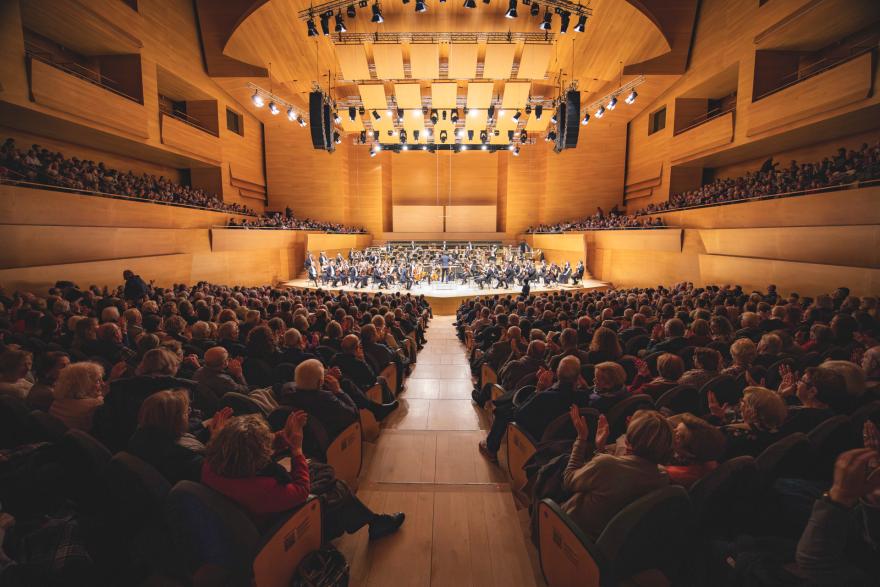
Following a two and a quarter hour concert, the Basque National Orchestra received standing ovations from its Barcelona audience on Friday, Saturday and Sunday for its concerts paying homage to Ravel, revealing Sorozabal and plunging into the demanding and great Mahler.
The concert programme was presented as the best musical proposal for an orchestra to fulfil its dual role while touring as acting as a cultural ambassador while showing its solid position in the universal repertoire on its tours.
The concerts began, to almost full halls, with the Alborada del gracioso by Ravel, a Basque yet universal composer, to commemorate him on the 150th anniversary of his birth while at the same time, sharing its complicity with the Barcelona Symphony Orchestra and National Orchestra of Catalonia (OBC), in its exchange with the Basque National Orchestra, to symbolise the union of both orchestras on both sides of the Pyrenees.
This was followed by Pablo Sorozabal and his Siete Lieder, a work written by the Basque composer during his German period, which includes poems by Heinrich Heine translated into Basque by José Arregi. The Siete Lieder are a selection of these poems in song form. sung in Basque and dedicated to outstanding figures of Basque culture. In this work, Sorozabal merges the German tradition with the rhythms and modulations of Basque folklore, and the Navarrese soprano Sofía Esparza, with the lyrical beauty of her voice, took them and made them her own, for their finest interpretation. From the first song 'Amesetan' to the seventh 'Agertu yatan orriya', Esparza sweetly highlighted the enormous quality of these seven poems, a revelation for the Catalan public.
Following the interval came Mahler's ever-demanding, colourful Fifth. This symphony, with its autobiographical connotations, spans all the emotional states of a composer on the verge of death throughout its almost 70 minutes: from the initial trumpet solo that intones a funeral march to its triumphant finale with its idea of reaching the 'awakening', Mahler navigates despair, melancholy, optimism and even a declaration of love, the latter identified in the renowned Adagietto heard in Death in Venice. The Basque National Orchestra is highly familiar with this symphony, having performed it on its international tours and also, a few days before travelling to Barcelona, in the Vitoria and Pamplona Symphony Season. All the sections of the orchestra led by their soloists, with a special mention to the trumpet soloist Alberto Romero and the horn soloist Adrián García Carballo, were brought together in a compact musical body which solvently and soundly defended Mahler's famous, brilliant Fifth, conducted by Antonio Méndez.
Interesting exchanges
Following the concerts, the General Director of the OBC, Víctor Medem, and his counterpart in the Basque National Orchestra, Roberto Ugarte, agreed on the interest this type of exchange holds, both for the orchestras and their musicians and for the public who listen to them.
Concerts
- 24 November (19:30): Jesús Guridi Conservatory (Vitoria)
- 25 November (19:30): Baluarte Auditorium (Pamplona)
- 28 November (19:00): L’Auditori (Barcelona)
- 29 November (19:00): L’Auditori (Barcelona)
- 30 November (11:00): L’Auditori (Barcelona)
Programme
- M. Ravel: Alborada del gracioso [8’]
- P. Sorozabal: 7 Lieder [16’]
- G. Mahler: Symphony No. 5 [68’]
The Basque National Orchestra in Barcelona


OBC in Euskadi

The Basque National Orchestra and the OBC stage a symphonic dialogue on both sides of the Pyrenees
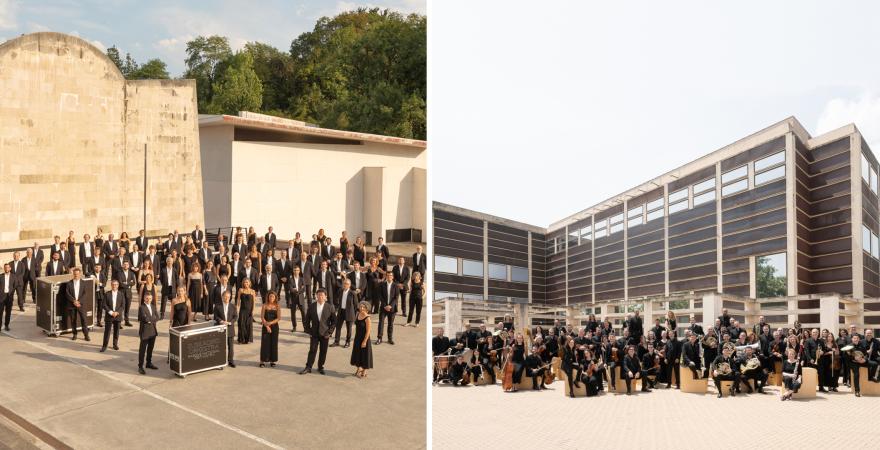
The Basque and Catalan orchestras to exchange their respective seasons next week.
The Basque National Orchestra will offer the concert programme 'Sorozabal/ Mahler' on 24 and 25 of November in Vitoria and Pamplona, before taking it to L'Auditori in Barcelona on 28, 2 and 30 of November.
With a programme that combines Catalan composers with classics by Debussy and Ravel, Barcelona Symphony Orchestra and National Orchestra of Catalonia (OBC) will visit Bilbao on 26 November and San Sebastián on 27 and especially 28 November, the day the two orchestras will cross paths and coincide simultaneously in their two seasons.
The Basque National Orchestra and the Barcelona Symphony Orchestra and National Orchestra of Catalonia (OBC) will once again exchange places after 23 years symbolically, by taking Ravel to both sides of the Pyrenees: The Basque National Orchestra will begin the exchange with Alborada del gracioso by the composer from Ziburu while the OBC will conclude its concert programme with Ravel’s renowned, universal Bolero.
In addition to these two popular works, both orchestras have prepared programmes combining the Basque music of Sorozabal with the Catalan music of Mompou, Albéniz, Gerhard and the recently premiered work Pluja by Miquel Oliu, together with the French music of Debussy and the German works of Mahler.
The Basque National Orchestra with 'Sorozabal/ Mahler' in Barcelona
The Basque National Orchestra will kick off in Vitoria and Pamplona with a programme that will again take it to L'Auditori in Barcelona, making this its seventh visit to the city. Antonio Méndez, one of Spain's most internationally renowned conductors, will lead the orchestra with a Basque programme that creates a suggestive contrast of aesthetic currents. On the one hand, Maurice Ravel, whose Alborada del gracioso exudes Andalusian aromas, with its elegant orchestral palette; and on the other, the Germanic tradition that informed the compositions of Pablo Sorozabal, trained in Leipzig and Berlin. In his 7 Lieder from 1929, Central European harmonic and contrapuntal architecture coexist with Basque folklore and language, a combination that finds its ideal interpreter in the Navarrese soprano Sofía Esparza. The programme will be rounded off with one of Gustav Mahler's most tragic creations: Symphony No. nº5, written after haemorrhage brought him to the brink of death. While recovering, he composed this symphony of awakening, with its opening haunting trumpet solo.
Concerts
- 24 November (19:30): Jesús Guridi Conservatory(Vitoria)
- 25 November (19:30): Baluarte Auditorium(Pamplona)
- 28 November (19:00): L'Auditori (Barcelona)
- 29 November (19:00): L'Auditori (Barcelona)
- 30 November (11:00): L'Auditori (Barcelona)
Programme
- M. Ravel: Alborada del gracioso [8’]
- P. Sorozabal: 7 Lieder [16’]
- G. Mahler: Symphony nº5 [68’]
OBC with 'Mompou/ Ravel' in the Basque Country
The Barcelona Symphony Orchestra and National Orchestra of Catalonia is to visit the Basque National Orchestra Season for the third time, the first two being in 1999 and 2002. It will now be performing with its chief conductor, the French conductor Ludovic Morlot, and accompanied by the Catalan soprano Núria Rial. Together they will explore a crossroads by confronting emblematic works by Debussy (Prelude to the Afternoon of a Faun) and Ravel (Bolero) - of whom the group is recording the complete works in 6 albums - with the music of Catalan composers based in Paris, such as Mompou (Five Catalan folk songs) and Albéniz (The Magic Opal, suite), as well as Gerhard (Els ballaires dins un sac) and the recently premiered Pluja, the latest creation by Miquel Oliu from Barcelona. A repertoire that captivated a Hamburg audience of the Elbphilarmonie last Saturday on the OBC's tour of Germany and which is also expected to enthuse the Basque public.
Concerts
- 26 November (19:30): Euskalduna (Bilbao)
- 27 November (19:30): Kursaal (San Sebastián)
- 28 November (19:30): Kursaal (San Sebastián)
Programme
- I. Albéniz: The Magic Opal. Suite [16’]
- F. Mompou: Five Catalan folk songs [15’]
- R. Gerhard: Six Catalan folk songs. Els ballaires dins un sac [2’]
- C. Debussy: Prelude to The Afternoon of a Faun [10’]
- M. Oliu: Rain [15’]
- M. Ravel: Bolero [16’]
Tickets on sale
Tickets for both programmes (Sorozabal / Mahler and Mompou / Ravel) are on sale at euskadikoorkestra.eus y auditori.cat, and at the ticket offices of the relevant halls.
The Basque National Orchestra Music Room: a way of countering inequality and exclusion
The Music Room’s educational and social cycle continues to strengthen its determination to make the Basque National Orchestra a route to well-being, health and quality of personal and social life, doing so through innovative, pioneering and risky proposals as a way of countering inequality and exclusion.
This new cycle has four in-house productions: two presented last season - 'Musika tantak' and 'Logelan logale' - , and two premieres - 'Nire ama antzara' and 'Arriaga bizi da' - . These and other Basque National Orchestra productions set a standard and a course towards good practices in the sector, so much so that several of them have been programmed in other festivals and with other orchestras.
The cycle has over 70 activities in total, including the second edition of the 'Musikazaleak' workshops, in conjunction with FEVAS-Plena Inclusión Euskadi, and Open Rehearsals aimed at groups and educational centres.
The Music Room educational cycle has a longstanding tradition in the Basque National Orchestra’s programme and was initially conceived with the aim of bringing music closer to the general and younger public. Over recent years, more than ever, the cycle has paid special attention to the most sensitive segment of society. With the aim of furthering inclusion and accessibility to culture for disadvantaged groups, numerous activities have been added to the Music Room cycle.
This is also the case in this new Season 25/26 presented today, where several of the in-house productions have been designed for the purpose of integrating this feature in an integral and transversal manner.
‘MUSIKA TANTAK’, THE ULTIMATE EXPONENT OF INCLUSION
Musika tantak, the production on show at Miramon these days, focuses especially on accessibility to culture and the visibility of vulnerable groups. It makes for an innovative, pioneering and risky proposal. In Musika tantak, musicians from our orchestra together with young musicians of different abilities share the stage to create a magical universe in which each talent finds its place to shine and prove that diversity enriches us all.
This production premiered last season at the Kursaal and now returns with the further ambition of being more inclusive. Musika tantak is presented as a Concert for Schoolchildren these days (from 23 to 30 October) and is the first time that such as inclusive activity has been incorporated into this branch of Music Room. 2,800 primary and secondary schoolchildren from all over Gipuzkoa will attend this production in what is a necessary exercise of social inclusion.
In addition, Musika tantak has a Family Concert scheduled for 25 October in Miramon, intended as a relaxed session, a format that debuted last season and is here to stay. These relaxed sessions are ideal for an inclusive experience in which all the families share the stalls, both those with and without members with disabilities. This is a way of helping people with disabilities to attend individually with whomever they wish, in addition to those activities organised by their associations, without concern that their behaviour may be judged by the rest of the audience.
These relaxed sessions present a series of conditions that make them more open and less formal than the routines of a regular concert. The doors to the concert hall will remain open throughout the session to allow our audience to come and go at any time during the event. The hall will be lit at all times and special care will be taken to avoid any bright lights, loud noises or sensory surprises. All members of the audience will maintain a relaxed attitude towards any noise and movement during the performance. If it should be necessary to leave the hall, the entrance hall will be an alternative space for our audience to take a break and rejoin the event when ready. And the performers and staff will be well aware of the best practices with regard to access and inclusion.
The production Nire ama antzara will also have a relaxed session at the Family Concert on 14 February 2026 in Miramon.
PROGRAMME OF THE CYCLE
Four in-house productions
Year after year, the Basque National Orchestra has committed to producing its own productions with original scripts and shows created expressly to be premiered as part of its educational cycle. This new cycle has four productions of its own: Musika tantak, Logelan logale, Nire ama antzara and Arriaga bizi da. The first two were already presented last season and appeal to inclusion, diversity, accessibility to culture, participation; in short, to making the cultural rights of all people a reality. Nire ama antzara and Arriaga bizi da are two new productions that will combine the need for imagination, beauty and participation with artificial intelligence.
These four productions are presented in San Sebastian and Vitoria in the format of Concerts for Schools and Family Concerts.
On the one hand, it is expected that over the course of the entire Season over 7.500 infant, primary and secondary school students will attend the Concerts for Schoolchildren of these productions. These are students from around 100 schools in towns such as Altzo, Errezil, Zegama, Legazpi, Oñati, Ataun, Mendaro and Berrobi, among others. The Concerts for Schoolchildren currently enjoy the collaboration of the General Council of Gipuzkoa, the Provincial Council of Gipuzkoa, the Education Department of the City Council of San Sebastian, Kursaal Eszena and the City Council of Vitoria-Gasteiz.
And on the other, these productions will take place in the Family Concerts format, a cycle that has been running now for 29 years. The San Sebastian Family Concerts are sponsored by El Diario Vasco, and that scheduled for the Kursaal, Arriaga bizi da, has also been organised in conjunction with Kursaal Eszena. The concerts in the capital of Alava enjoy the collaboration of Municipal Theatre Network of Vitoria-Gasteiz. Tickets for these shows, priced between 3 and 8 euros, may be purchased via the website euskadikoorkestra.eus, as the dates of each show approach. Tickets can also be purchased at the box offices of the relevant venues and on the Kursaal website (kursaal.eus).
Below is detailed information on the productions and dates of their concerts:
1) MUSIKA TANTAK
An inclusive and interactive show where music, Basque mythology and audience participation go hand in hand.
With the participation of: Marie Gaillard (violin); Gabriel Mesado (cello); Paloma Torrado (double bass); Sara Zufiaurre (clarinet); Xabier Peña (percussion); Nacho Soto (piano); Ibai Murillo, Alberto Pérez, Dánae Riaño (interpretation and singing); Iñaki Cepas, Simón Ezquiaga, Mikel Hernández, Jon Ander López, Beñat Mendizábal, Ibai Mendizábal, Álvaro Polo (guest artists); Eli Arabaolaza (awareness-raising workshop); Yamel Romero (script and composition); Mikel Cañada (idea and direction).
Programme: works by Y. Romero, E. Grieg, S. Ezquiaga, C. Saint-Saëns, V. Horton.
CONCERTS FOR SCHOOLCHILDREN (Primary and secondary education)
23, 24, 27, 28, 29, 30, October (9:45 /11:15), Miramon, (San Sebastián)
FAMILY CONCERT (Relaxed session)
25 October (12:30*), Miramon (San Sebastián)
*Prior to the concert, at 10:45 a.m., a free, optional, complementary awareness-raising workshop will be offered. Registration: musikagela@euskadikoorkestra.eus
2) NIRE AMA ANTZARA
Maurice Ravel wrote his work Ma mère l'oye for the children of friends. Subtitled Five Children's Pieces, this work is also inspired by tales by the writer Charles Perrault. Using these elements, our proposal will replace words with images in a shadow theatre featuring live music, leaving it up to each child to re-create the different stories in his or her imagination. A wind quintet formation will bring this beautiful work to life.
With the participation of: Oihana Kontxeso (flute); Óscar Diago (oboe); Luis Cámara (clarinet); François Proud (bassoon); Marianne Tauzin (horn); Mikel Cañada (idea); Marta Bocos (shadow theatre, script and didactic guide).
Programme: M. Ravel, Nire ama antzara.
CONCERTS FOR SCHOOLCHILDREN (Early Childhood education)
10, 11, 12, 13, 17, 18, 19 February (9:45 / 11:15), Miramon (San Sebastián)
FAMILY CONCERTS (3 < 6 years)
1 February (17:00/18:30), García Lorca (Vitoria)
14 February (11:00 / 12:30), Miramon (San Sebastián)
3) LOGELAN LOGALE
Accessibility and participation, the pillars on which Music Room's proposal is based, find their maximum expression in this cantata, in which the Basque National Orchestra shares the stage with 1,000 schoolchildren to perform the 10 songs that make up the work Logelan Logale, written by Leire Bilbao and set to music by Jagoba Astiazaran. This cantata represents a huge collective effort by music teachers, participating schools, orchestra musicians, staff and collaborators, to make it possible for schoolchildren to live a unique experience of symphonic-choral singing. The Basque National Orchestra premiered this production in May 2025 in San Sebastián and Vitoria and it will serve to lend structure to the Basque Country through song, with the Bilbao Symphony Orchestra and the choirs of Bizkaia through the Confederation of Choirs of the Basque Country joining this project a year later.
With the participation of: Jagoba Astiazaran (original music); Leire Bilbao (libretto); Basque National Orchestra; Juanjo Ocón (conductor); Kepa Errasti (singer and actor); María Goiricelaya (stage manager)
Programme: Preludioa / Kask-kask! / Gauaren beltza / Oheko burkoa / Gaueko / Harri, orri, ar / Mamua ote da? / Nire itzala / Hitz jolasak / Ispiluaren aurrean / Logelan logale
CONCERTS FOR SCHOOLCHILDREN (Primary education)
21, 22 April (12:00), Kursaal (San Sebastián)
23 April (12:00), Jesús Guridi (Vitoria)
4) ARRIAGA BIZI DA
Emiliano Arriaga, while tidying up his attic, finds an old violin and, caressing its out-of-tune strings, plucks the keys of memory. He begins to recall his uncle, Juanito, a musician who died in Paris a few days before his 20th birthday… We know barely anything about his personality or his life, which was spent between the old quarter of Bilbao and Paris, the musical capital of the time, so in our concert we will play at guessing or imagining what Juanito was really like, always using his music, other musicians of his time and with the help of Artificial Intelligence, which perhaps will allow us to converse for a moment with this endearing and brilliant Bilbao native.
FAMILY CONCERTS (6 < 10 years)
9 May (18:00*), Kursaal, Chamber Hall (San Sebastian)
10 May (18:00*), Félix Petite (Vitoria)
*Prior to the concerts, at 16:45 a.m., a free, optional, complementary awareness-raising workshop will be offered. Registration: 943003170 (San Sebastián) / 945161045 (Vitoria).
Musikazaleak
The Basque National Orchestra has a long record of fostering inclusion in the Music Room, led by FEVAS Plena Inclusión Euskadi. Both entities began working on a joint initiative over 15 years ago, with the aim of fostering inclusion and the right to culture for those with intellectual or developmental disabilities. Since then, some 1,500 people have taken part in numerous activities, chief among which are the workshops in Bilbao, Vitoria and San Sebastian, together with concerts at the orchestra's centre in Miramon. These activities have earned it the "Good Practice" prize awarded by the Spanish Confederation of Organisations for People with Intellectual Disabilities (FEAPS) and have sown the seed with examples such as Mosaic of sounds, an initiative that then spread to 14 Spanish orchestras as an innovative practice in which music becomes an instrument for personal development and social inclusion. This initiative received the CERMI 2018 national award for advancing disability inclusion by means of music. More recently, the Basque National Orchestra also received, together with the Orfeón Donostiarra and Musikene, the Aspalagun 2025 Recognition, for its awareness and visibility work, carried out within the framework of Music Room.
Last season, this shared project took a fresh and major step forward with the launch of Musikazaleak. Musikazaleak consists of forming three fixed groups (one in Bilbao, one in San Sebastian and one in Vitoria) of some fifteen people with intellectual or developmental disabilities who will take part in eight musical workshops and perform a concert at the end of the course. The first experience bore extraordinary fruit and the second edition is already underway.
These workshops are led by Yamel Romero, composer, music therapist and sophrologist specialised in the accompaniment and development of teams and individuals through music. And they have the collaboration of the Conservatorio Juan Crisóstomo de Arriaga de Bilbao and the Municipal Theatre Network of Vitoria-Gasteiz.
Open rehearsals
Music Room continues with its Open Rehearsals, aimed at groups, schools, conservatories and universities, among others, which offer a chance to see first-hand how our orchestra works in the moments leading up to a concert. Three Open Rehearsals will be offered this season, two in January and one in May.
PROJECTS THAT FLY FREE
It is noteworthy how the Basque National Orchestra's commitment to creating innovative and quality productions of its own makes it a reference for other cultural agents to seek. This season alone will see three productions staged at three different venues:
- Ilargiari Kantari, to be presented at the Durango Musical Fortnight on 2 November, at 18:00, at the Teatro San Agustín. This is the fifth consecutive year that Durango has incorporated the Basque National Orchestra’s productions into its programme.
- Pantomime will be offered as part of the Baluarte Txiki programme at the Baluarte Auditorium in Pamplona.
- And the cantata Logelan logale, commissioned and premiered by the Basque National Orchestra during the last Season and programmed again now, is taken up by the Bilbao Symphony Orchestra, which will offer it as a Concert for Schoolchildren for the whole province of Bizkaia.
It is worth remembering that in previous seasons, other productions such as Living Room Music have also been toured in our territory and beyond.
MUSIC ROOM ON YOUTUBE
Music Room has its own section on the YouTube Channel of the Basque National Orchestra, where you can see complete performances of the cycle, such as Logelan Logale; Ilargiari kantari; Polikinela; Living Room Music and Mozart, Nannerl eta Lagunak. In addition, videos of this season's concerts will be uploaded as they take place.
BROAD NETWORK OF COLLABORATORS
The Basque National Orchestra’s Music Room cycle continues to strengthen its collaboration with various institutions in the surrounding area, such as the General Council of Gipuzkoa, the Provincial Council of Gipuzkoa, the Education Department of the San Sebastian City Council, the Municipal Theatre Network of Vitoria-Gasteiz, Kursaal Eszena and El Diario Vasco.
PROJECTS AND NETWORKS PROMOTING INCLUSION
The full Music Room cycle forms part of ARTIS+, art for social inclusion, a European cross-border cooperation project that seeks to improve the accessibility of cultural facilities for groups of those at risk of exclusion, whether for reasons of disability or for social reasons. This project will continue until 2027, shared with partners such as the Orchestre National du Capitole de Toulouse, L'Auditori and OBC Orchestra of Barcelona and the Orchestra of Pau, among others.
In the same vein, Music Room’s programming now forms part of Gertu Kultura, a network of cultural programmers who join forces to facilitate access to culture for people in vulnerable situations. This non-profit initiative seeks to improve people's quality of life through culture. To this end, by working with cultural programmers and social entities, it creates unique cultural spaces and experiences at very low prices, providing priority access and personalised treatment based on listening to and responding to the needs of different groups. Gertu Kultura comes from the Apropa Cultura network, set up by the Auditori de Barcelona which, after two decades of experience in Catalonia, is now a model inclusive network, with more than 190 cultural programmers, more than 1,800 social entities and over 54 municipalities.
Associations that participate in some of the Music Room proposals:
Apdema, Apnabi, Aspace, Atzegi, Futubide, Gaude, Gautena, Gertuan, Gorabide, Goyeneche, Uliazpi, Usoa, Erroak-Sartu Elkartea, Emaus, Elkargune, Bagara-Gureak, Garagune, Berio Gerontological Centre, Brain Injury Day Centre, Maldatxo Psychosocial Rehabilitation Centre.
ARTIS+
This cycle forms part of the ARTIS+ project, which is 65% co-funded by the European Union through the Interreg VI-A Spain-France-Andorra Programme (POCTEFA 2021 - 2027).

More information
Concerts & TicketsSingle and season tickets for the Miramon Matinées are now on sale

The Basque National Orchestra's chamber music cycle kicks off on anew 11 October with 16 new musical events. Special guests such as Miguel Ituarte and Bilboko Koral Elkartea will join the numerous groups of members of Basque National Orchestra that form the rest of the programme.
On Saturday 11 October, the 2025/2026 Season of the Miramon Matinées will begin at the venue of the Basque National Orchestra. For 34 seasons now, they have offered a quality alternative to the symphonic sound of this great orchestra, with a lighter, more approachable format. This chamber music cycle of the Basque National Orchestra will offer a short musical ritual on Saturday mornings with sixteen varied and evocative events each season. The cycle, which has enjoyed the support of the Kutxa Fundazioa, will run until 6th June.
A varied programme
Chief among the section of special guests are the renowned pianist Miguel Ituarte and the Bilbao Choral Society. Another unique event will be presented by percussionists from Bilbao Orkestra Sinfonikoa and the Basque National Orchestra. Performers from both orchestras will join forces to present a concert with a varied repertoire focusing on the use of new technologies applied to percussive chamber music.
Dozens of members of the Basque National Orchestra have formed trios, quartets and quintets of multiple instrumental combinations to offer a varied repertoire ranging from the Baroque to the present day. And they do so in an airy, relaxed, quality format, lasting approximately one hour, as an opportunity for these musicians to branch out and leave to one side their usual symphonic format. Haizea, Irauli, Soka Bones, Belharra or the Delicia Ensemble are just some of the groups that will take the stage at Miramon. Special mention should be made of the concert opening the series, given by Kaabestri, a group that is distinct in size, with up to 16 performers on stage.
Sixteen proposals
All these proposals make up an attractive menu in which everyone will find their own particular gem. This is the full schedule of this season's Matinées:
- 11 October: Kaabestri
- 18 October: Haizea
- 15 November: BosEo Percussion Group
- 29 November: Miguel Ituarte
- 13 December: Bilboko Koral Elkartea
- 20 December: El Sonido del Silencio
- 17 January: Irauli
- 31 January: Diálogos armónicos
- 21 February: Sibel
- 28 February: Belharra
- 21 March: Soka Bones
- 11 April: Ensemble Phantasy
- 25 April: Delicia Ensemble
- 9 May: Ensemble Clásico
- 23 May: Tango Berria
- 6 June: Miramon Ensemble
Season and regular tickets
The general price of a season ticket for the 16 concerts is 96 euros and 75.20 euros for those who benefit from the special rate (over 65s, under 30s, season ticket holders of other cycles of the orchestra, Kursaal Eszena, friends of Eureka! Zientzia Museoa and Musikene). Tickets are now on sale via the Basque National Orchestra’s website (euskadikoorkestra.eus) or by calling its offices (943 01 32 32).
Single tickets are priced at 11 euros and can be purchased at euskadikoorkestra.eus, at the Kursaal Auditorium box office and on the day of the concert, subject to availability, at the box office of the orchestra's main office in Miramon.
Free bus service
The concerts will be held at 11:00 a.m., at the Basque National Orchestra venue in Miramon. To attend, the orchestra will continue to provide a free bus service for the public. It leaves at 10:25 a.m. from Gipuzkoa Plaza 4 and stops at Sancho El Sabio 18 and Avda. de Madrid 34.
The San Sebastián Festival, the Euskadiko Orkestra and the SGAE Foundation will offer the ‘Concert & Screening’ at the Velodrome on Saturday 20 September
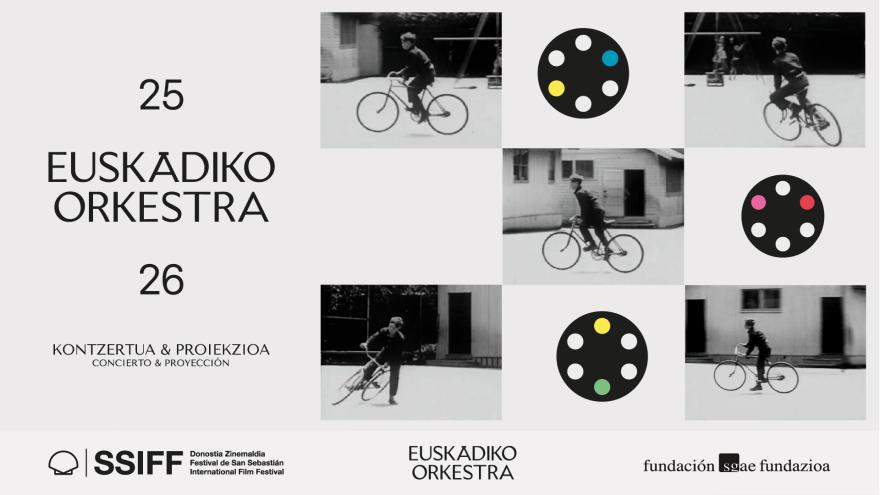
The Euskadiko Orkestra, the SGAE Foundation and the San Sebastián Festival present the concert of film music performed by the National Orchestra as part of the event. On the first Saturday of the Festival, the Velodrome opens to music lovers, movie buffs and the general public for a show combining the symphony performance of soundtracks with a collage of scenes from the movies to which they belong.
The event will offer a treat for the eyes and ears lasting for 75 minutes on Saturday, 20 September, at 6 p.m. Entry is free.
The film music concert is now a classic at the San Sebastian Festival, and is solidly established among proposals at the Velodrome, without a doubt the Festival's most popular venue, with seating for 3,000 spectators. The conductor from San Sebastian, Juan José Ocón, will take the Orchestra through its steps in this massive coming together of cinema and soundtracks. The guests at this latest concert by the Euskadiko Orkestra, the Easo Abesbatza choir, will perform in Dragonkeeper, Money Heist, Parecido a un asesinato and El capitán Trueno y el Santo Grial.
This year's Concert & Screening comes with a total of seven pieces composed and adapted for different types of audiovisual works. The performance will include a nod to the history of Spanish cinema with excerpts from the original soundtracks of the films La fierecilla domada, El ruiseñor de las cumbres, El secreto de Mónica, Cabriola and Las chicas de la Cruz Roja, composed by Augusto Algueró and arranged by Claudio Ianni; Los futbolísimos 2, a film by Miguel Ángel Lamata (2018) with music by Alba S. Torremocha; La boda de Rosa / Rosa’s Wedding, directed by Icíar Bollain (2020) and with a soundtrack by Vanessa Garde; Dragonkeeper, by Salvador Simó and Li Jianping (2023), with music by Arturo Cardelús; the series La casa de papel / Money Heist by Jesús Colmenar, with music by Iván M. Lacámara; and the compositions of Luis Ivars for the feature films Parecido a un asesinato (featuring the song Caminar en el tiempo) co-created with Blanca Paloma and JP Polo and El capitán Trueno y el Santo Grial, both directed by Antonio Hernández Núñez (2025 and 2011). Parecido a un asesinato will have its premiere at the RTVE Gala on Tuesday 23rd at 16:30 in the Príncipe cinemas, attended by the director and its protagonists, Blanca Suárez and Eduardo Noriega.
As it has done in previous years, the concert will have an added visual element: the music will tie in with the showing on a 400m2 screen of a collage of scenes from the films, specifically created for this concert by the Morgancrea team. In addition, some of the composers will attend the concert and take to the Velodrome stage to introduce their work.
Entry is free, although the corresponding invitation must be collected from 13-19 September from the San Sebastian Festival information point at the Kursaal from 9:00-20:00, and from the Donostia Turismoa tourist office, Monday-Saturday from 09:00-20:00 and on Sunday from 10:00-14:00. The last remaining invitations can be collected from the Velodrome ticket box on the same day of the concert from 10:00.
The Euskadiko Orkestra with the Festival
Over the years, the Euskadiko Orkestra has been present at the San Sebastian Festival in different ways. One of its most remarkable participations was at the 2012 edition, when it gave a live performance of the soundtrack accompanying the premiere of Juan Antonio Bayona's world-famous movie The Impossible, a score carrying the signature of Fernando Velázquez. From the following year, 2013, the Orchestra started to give a regular live concert of film music, first of all at its Miramon headquarters and, from 2015, at the Velodrome, on the enormous stage still in place this year. In this decade of film music concerts, the Euskadiko Orkestra has performed the soundtracks of feature films including Handia / Giant, Errementari / The Blacksmith and the Devil, Arrugas / Wrinkles, Pájaros de Papel / Paper Birds, Los crímenes de Oxford / The Oxford Murders, Tadeo Jones 2 / Tad the Lost Explorer and the Secret of King Midas, Mientras dure la Guerra / While at War, and Buñuel en el laberinto de tortugas / Buñuel in the Labyrinth of the Turtles… In total, the Euskadiko Orkestra has performed and drawn attention to more than 70 soundtracks of movies from our film world. Note too that the Orchestra recorded the theme tune for the Festival’s 1991 and 1992 editions.
As well as its consolidated collaboration with the San Sebastián Festival, the Euskadiko Orkestra has frequently revisited the world of film music. Worthy of mention are the recordings of the soundtracks of Patria and Maixabel, added to earlier recordings such as Un monstruo viene a verme / A Monster Calls —with which Fernando Velázquez won the Goya for Best Original Song in 2016— Ocho Apellidos Vascos / A Spanish Affair, Contratiempo / The Invisible Guest, Submergence, etc.
The SGAE Foundation with the cinema
Since 2012, the SGAE Foundation has been jointly organising the non-competitive Made in Spain section, featuring a selection of Spanish movies produced in the last year, whether or not they have been released, to which the Festival provides an excellent springboard for their international dissemination. These works will screen from 23-27 September at the Sala Berlanga in Madrid.
The Foundation created by the Spanish Society of Authors and Publishers (SGAE) also gives the Dunia Ayaso Award to the Best Screenplay focused on the gender perspective which will, in 2025, celebrate its ninth consecutive edition paying tribute to the director from the Canary Islands who died in 2012.
For its part, the SGAE Territorial Council in the Basque Country backs the Award going to the Best Basque Screenplay, given yearly by the Professional Association of Basque Screenwriters at the Festival itself.
The Basque National Orchestra to start off the 25/26 Season by participating in ‘Amaya’ by Guridi at the Musical Fortnight
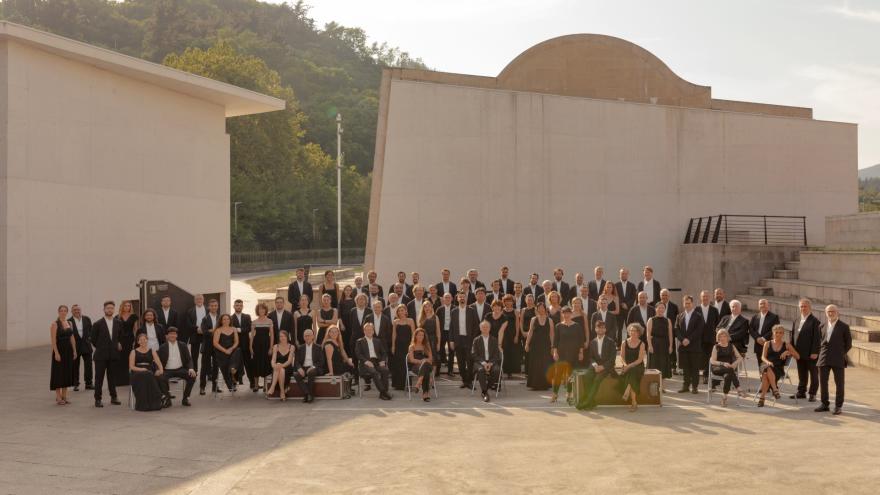
The concert version of this opera in Basque will take place on Saturday 9 August (20:00) at the Kursaal. Also in concert version, the Basque National Orchestra is participating in the performance of Bernstein's 'West Side Story' on August 20th (20:00) at the Kursaal.
In addition to this dual participation in the San Sebastian festival, the Basque National Orchestra will make several recordings this August, including a recording of Aldave's masterpiece, 'Akelarre'.
The Basque National Orchestra kicks off its traditional participation in the San Sebastian Musical Fortnight on 9 August (20:00) at the Kursaal with Jesús Guridi's Amaya, one of the major works by this prolific composer from Vitoria, which has never before been performed in the Fortnight. This historical style opera, sung in Basque, and with music with Wagnerian overtones, was composed by Guridi at the height of his musical creativity. The concert version of this opera will be conducted by Diego Martin-Etxebarria and, in addition to the Basque National Orchestra and the Easo Coir (with Gorka Miranda at the helm), it will feature a broad cast of voices: Arantza Ezenarro (Amaya), Gillen Munguía (Teodosio), Marifé Nogales (Amagoya), Lucía Gómez (Plácida / Olalla), Juan Laborería (Asier / Ermitaño / Caballero) and José Manuel Díaz (Miguel / Messenger).
The other event in which the Basque National Orchestra will be taking part, again together with the Easo Choir, is Leonard Bernstein's West Side Story, on 20 August (20:00) at the Kursaal. Bernstein wrote of this work that it "must tread the fine line between opera and Broadway". And so it has been; both musical and opera theatres programme this work because it is one of the most popular and well-written of the 20th century's lyrical works. Again in concert version, this work will be directed by Clark Rundell, and the voices will be those of Miren Urbieta-Vega (María), Caspar Singh (Tony), Henry Neill (Riff), Nerea Berraondo (Anita) and Jorge Ruvalcaba (Bernardo).
Recordings
In addition, during the month of August, the Basque National Orchestra will make several recordings. At the beginning of the month, Miramon already hosted the recording of Christmas carols in Basque, a joint project with EITB, and the orchestra will then end the month with a recording of Pascual Aldave's masterpiece, Akelarre.
The Basque National Symphonic Season as of 29th September
The Basque National Orchestra’s Symphonic Season will begin on 29 September celebrating the 150th anniversary of Ravel's birth, with his symphonic-choral masterpiece Daphnis et Chloé. It will do so under the baton of Stefan Blunier and Landarbaso Abesbatza. In addition, soprano Miren Urbieta-Vega will be performing Berlioz's Herminie with the orchestra. Season tickets, which include attendance at 10 concerts, have been on sale since last 1st July, and tickets for all the concerts during the Season will be on sale from 1st September.
Season 25-26
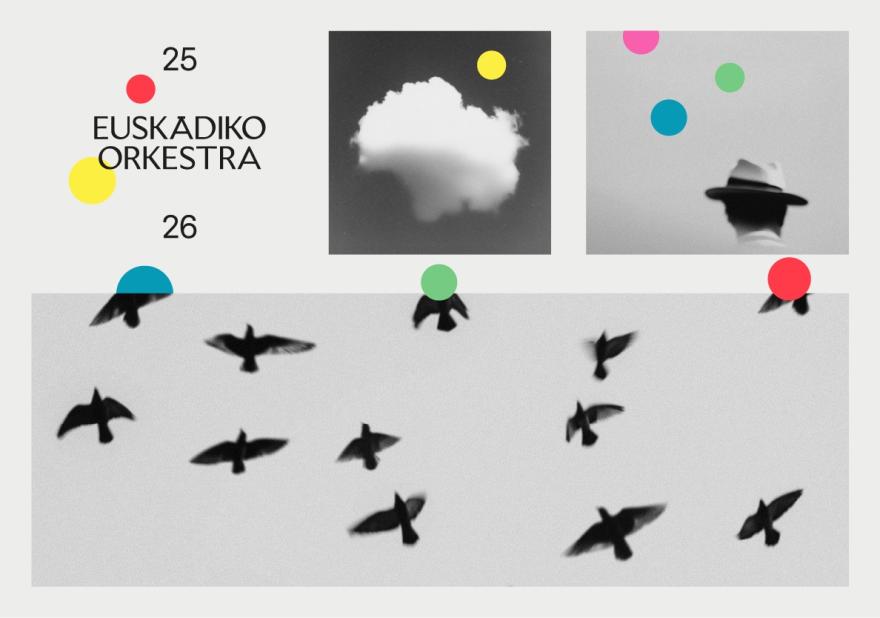
The Basque National Orchestra presents a very feminine, highly choral, very youthful, powerful and Season with deep roots.
Great works of the symphonic repertoire will be performed, works of reference and also newer works that are to become part of our heritage, such as the premiere of the most recent symphonic work by Felix Ibarrondo, 'Guernica'.
To make this programme possible, the orchestra will welcome up to 24 artists, three choirs and a guest orchestra.
The Basque representation will be important, both in terms of composition (Ravel, Arriaga, Sorozábal, Bernaola, Ibarrondo) and performance.(Miren Urbieta-Vega, Sofía Esparza, Marifé Nogales, Elena Sancho Pereg, Marta Zabaleta, Landarbaso Abesbatza, Orfeón Donostiarra, Vocalia Taldea).
The orchestra will undertake the first recording of 'Akelarre', a masterpiece by the Navarrese composer Pascual Aldave which will remain an important legacy in the catalogue pf Basque compositions.
And it will return to the Auditorium of Barcelona, in an exchange with its orchestra, and also to the Soriano Musical Autumn.
SYMPHONY SEASON PROGRAMMING
The Basque National Orchestra 2025/2026 Symphony Season will begin on 29 September 2025 in Vitoria and will conclude on 9 June 2026 in San Sebastian. It will feature a total of 12 programmes which, divided between Vitoria (10), Bilbao (10), San Sebastian (10x2) and Pamplona (10), will mean a total of 50 concerts during the Symphonic Season alone.
The new image of the Season and all those accompanying it will feature a new narrative language, designed from a digital perspective and giving prominence to an audiovisual format. One of the great challenges today is to stand out in a very complex, fragmented and polarised panorama, where classical music and the Basque National Orchestra need to gain their space. An exercise has been carried out to seek out the extraordinary within the ordinary, to find magic in the everyday. And we have built a graphic universe to we work with everyday, recognisable elements to transform them into surprising, exciting, magical and sometimes unexpected images and micro-stories. This graphical tour will be led by ACC Comunicación.
Main programme lines
Each season is a musical challenge and a new adventure that must discover how to combine the presentation of new, little known or rarely performed works with the great repertoire and reference works, symphonic and symphonic-choral works, while always seeking to make sense of our current reality.
There will be repertoire works that the Basque National Orchestra will perform for the first time, such as Herminie by Berlioz (to be performed by Miren Urbieta-Vega); Never Give Up by Fazil Say, which he wrote for the cellist Camille Thomas in response to the terrorist attacks in Paris and Istanbul; Franz Schmidt's Symphony No. 4; the rarely performed Symphonic Variations by César Franck in the hands of pianist Marta Zabaleta; Johann Sebastian Bach's Ich habe genug. And Guernica, the last symphony written to date by the composer Félix Ibarrondo, which will be premiered by the Basque National Orchestra in January 2026.
Among the great works of reference that will sit on the music stands of the Basque orchestra will be Ravel's Daphnis et Chloé, on the 150th anniversary of his birth; the last 4 Lieder by Strauss, his most popular work, which will be performed by one of the leading voices of the moment, Rachel Willis-Sørensen; The fourth symphonies of Bruckner and Brahms; Respighi with his two successful works Fontane di Roma and Pini di Roma; Rachmaninoff and his Piano Concerto No. 3, famous for its musical and technical demands of the performer who in this case is Nikolai Lugansky. Another extremely difficult concerto for violin, one considered a masterpiece, was written by Tchaikovsky and will be performed by the young Bomsori. The Basque National Orchestra will also perform Tchaikovsky's Fifth Symphony, a popular work representing the image of destiny which will bring the Season to an end in June 2026. Bartok with the Concerto for Orchestra, Pictures at an Exhibition, Death and Transfiguration by Strauss, Walpurgis Night, the pièce de resistance entrusted to the Orfeón Donostiarra, and A Midsummer Night's Dream, with Vocalia Taldea, Elena Sancho Pereg and Marifé Nogales, to lend body, energy and enormous vitality to the new season.
The Basque essence
The Basque National Orchestra will continue to delve into its mission to promote and disseminate Basque creation through its programming. It is a country orchestra, which draws on its roots to present itself to the world. And in this season that essence will stand out with examples such as Ravel, Arriaga, Sorozábal, Bernaola and Ibarrondo.
Two Basque composers will be especially remembered in the programming of this new Season: Ravel and Arriaga. On the 150th anniversary of his birth, we will evoke Ravel with his fundamental work, considered the finest and the culmination of his compositional career, Daphnis et Chloé. It will be performed by the orchestra with Landarbaso Abesbatza. And as a result of this exchange between the Basque and Catalan orchestras, Ravel will be united on both sides of the Pyrenees with La alborada del gracioso by the Basque National Orchestra in Barcelona and Bolero performed in the Basque Country by the Symphonic Orchestra of Barcelona and National Orchestra of Catalunya.
On the 200th anniversary of the death of Juan Crisóstomo de Arriaga, the Basque National Orchestra will perform the overture to the work that most set him apart, The happy slaves.
Together with Ravel and Arriaga, the season will also feature works by Pablo Sorozábal, Carmelo Bernaola and Félix Ibarrondo at different times. Pablo Sorozábal's Seven Lieder will be performed by the Navarrese soprano Sofía Esparza, who will accompany the Basque National Orchestra on its visit to Barcelona. Bernaola's Abestiak is a tribute to the composer from Otxandio, who also wanted to pay homage to Juan de Antxieta with this work. And lastly, Félix Ibarrondo, a composer from Oñati with a prolific output, whose last symphony to date, Guernica, will be premiered by the orchestra.
We can add Pascual Aldave to this list of Basque composers, since, apart from the Symphonic Season, the Basque National Orchestra will undertake the first recording of his most important work: Akelarre.
The section of Basque performers deserves special attention this Season. The voice will be all important: not in vain seven of the twelve symphonic programmes will have feature voices and a large number of them will be Basque and female. Miren Urbieta-Vega (Herminie), Sofía Esparza (Siete Lieder), Elena Sancho Pereg and Marifé Nogales (La nuit and A Midsummer Night's Dream). Marta Zabaleta (Symphonic Variations) on piano is on the line-up of instrumental soloists. And in its determination to highlight the fine choirs of Euskadi, this season will see three ensembles: Landarbaso Abesbatza (Daphnis et Chloé), Orfeón Donostiarra (Walpurgis Night) and Vocalia Taldea (La nuit and A Midsummer Night's Dream).
Artists
The orchestra will once again receive a good handful of artists in its programme, a total of 28 artists distributed among twelve conductors, six instrumental soloists and ten vocal soloists, as well as three choirs and a guest orchestra. With an average age of 45 years, the human capital of this Season combines the freshness of their performances with the experience of their careers and musical virtuosity.
DIRECTORS
Three female conductors head the list of conductors who will occupy the podium: Katharina Müllner, Joana Carneiro and Ana Mª Patiño. The other nine programmes of the Season will be nourished by repeat conductors such as Riccardo Frizza, Juraj Valcuha and Michal Nesterowicz, and conductors making their debut with the Basque National Orchestra such as Stefan Blunier, Jaime Martín, Antonio Méndez, François López-Ferrer, Alexander Liebreich and Ludovic Morlot, who will come with the OBC of which he is the resident conductor.
SOLOISTS
This will be a star section of the programme with the incorporation of up to 16 vocal and instrumental soloists. Of the 16 artists, 10 will be women, 5 of whom are Basque. That is why it will be in this section where this very feminine, very choral, very young, very powerful and deeply rooted look will reach its maximum expression. The voices of Miren Urbieta-Vega, Sofía Esparza, Elena Sancho Pereg and Marifé Nogales and Marta Zabaleta on piano represent a good part of these qualities. But in addition, the trajectories of soloists such as Rachel Willis-Sørensen, Bomsori, Camille Thomas, who is coming for the first time, Nikolai Lugansky and Johannes Moser, who are repeating, complete with solidity and brilliance the main characteristics of a Season that appears powerful and energetic.
CHOIRS
The choral part will also play an important role in the new season. Landarbaso Abesbatza will open the season with a performance of Ravel's Daphnis et Chloé, the Orfeón Donostiarra will perform Mendelssohn's Walpurgis Night and the female voices of Vocalia Taldea will take up the baton, in another outstanding vocal and female programme, with Mendelssohn's A Midsummer Night's Dream and Saint-Saëns' La nuit.
GUEST ORCHESTRA
The Basque National Orchestra recovers its exchange policy that it opened precisely more than two decades ago with the OBC (Barcelona Symphony Orchestra and the National Orchestra of Catalonia). The two orchestras will perform simultaneously in November as respective guest orchestras, and the two will join forces on both sides of the Pyrenees through Ravel. Ravel's Boléro will be heard in the version of Ludovic Morlot and his orchestra, which will also offer a very Catalan programme and will include the premiere of Pluja by Miquel Oliu. And the Basque National Orchestra will return to L'Auditori with Ravel's La alborada del gracioso, Sorozábal's 7 Lieder, which will feature Sofía Esparza, and Mahler's Fifth, a work that she took on her tour of Poland and which she defends with mastery. The OBC will give concerts in Bilbao and San Sebastián on November 26th, 27th and 28th.
OTHER ACTIVITIES OF THE ORCHESTRA
Salidas: Barcelona Auditorium and the Soriano Music Festival
The Basque National Orchestra returns after more than two decades to L'Auditori, a venue it had the good fortune to visit a few months after its inauguration, in a new example of exchange between orchestras. It will return to Barcelona in November for the OBC Season with three concerts and a programme that will unite the figure of Ravel on both sides of the Pyrenees (28th, 29th and 30th November).
The Soriano Musical Autumn is another frequent event for the Basque National Orchestra. On this occasion it will be presented with the Basque voices of Marifé Nogales and Elena Sancho Pereg, as well as Vocalia Taldea (4 September).
Recordings: Akelarre' by Pascual Aldave
Another important cornerstone of the orchestra's activity is its recordings, with more than 80 volumes, mainly centred on Basque creations.
The year 2024 marked the centenary of the birth of one of the most important symphonists of 20th century Basque music: Pascual Aldave. To mark the occasion, the Basque National Orchestra has made an effort to perform what has been considered his masterpiece, Akelarre, throughout last season. Now it has taken a step further and at the end of August will commence the recording of this great work of which there is no previous record. This first recording will be a historic milestone in itself and will leave an important legacy in the Basque compositional catalogue.
ARTIS+, art for social inclusion
ARTIS+, art for social inclusion is a cooperation project that takes the Pyrenees as its mainstay and is developed between the south of France, the Basque Country and Catalonia. It seeks to reinforce the role of culture in population groups at risk of exclusion for reasons of disability or social exclusion. It will run for three years, 2024 - 2026, and the Basque National Orchestra is committed to integrating the objectives of this project through its different cycles: Matinées de Miramon, Musika Gela and the Symphonic Season.
In its first edition, the following have taken shape Abestu Euskadiko Orkestrarekin, Musika tantak, Logelan logale and Musikazaleak. And with them we can say that between participants and the public, this initiative has been shared by almost 9,000 people. These four projects will continue in their second edition and work is already underway to continue to grow in an inclusive society, in this case through the experiences offered by the Basque National Orchestra.
Other projects and cycles
The orchestra will maintain its commitment to the ABAO Bilbao Opera Season, Musika-Música de Bilbao, the BBVA Foundation Frontiers of Knowledge Awards Gala, San Sebastian Musical Fortnight, Zinemaldia and Musikaste.
The orchestra's Matinées de Miramón and Musika Gela cycles will be presented at a later date.
SEASON AND REGULAR TICKETS
Season ticket sales from 1 July onwards
After the renewal period for current season ticket holders, the sale of new season tickets will open. Reservations can be made from 1 July onwards through euskadikoorkestra.eus, by calling 943 01 32 32 or sending an email to abonatuak@euskadikoorkestra.eus. Subscriptions will be taken in order of receipt and subject to availability. The price of season tickets for 10 concerts in this new season ranges from €85 to €245.
Single tickets will be on sale from 1 September.
All tickets will be on sale from 1 September at euskadikoorkestra.eus and at the auditoriums' websites and ticket offices (except in Vitoria). Single ticket prices range from €10 to €40. The application of discounts for different groups is maintained and is one of the categories that works best: Last Minute Youth, tickets at €10 in all areas, for under 30s and from 30 minutes before the concert.
SPONSORSHIP
Sponsorship makes it possible for those who wish to contribute to the development of this cultural project of the country to do so with their contributions. It is presented as a necessary tool for the future, complementary to the subsidy policies of public administrations, and is destined to become a means of contribution and development of culture and society. Contributions to the orchestra in any of its forms will benefit from a tax deduction. More information at euskadikoorkestra.eus
ACKNOWLEDGMENTS
Lastly, the orchestra would like to thank the important collaboration and support of all the entities that participate in the development of its different activities: its subscribers and the general public, sponsors and collaborating entities, cultural agents, the media, etc., who make the activity of the Basque National Orchestra possible.
More information
Season programme (.pdf)Roberto Ugarte Alvarado is proposed by the Board of Directors for the general management of the Basque National Orchestra
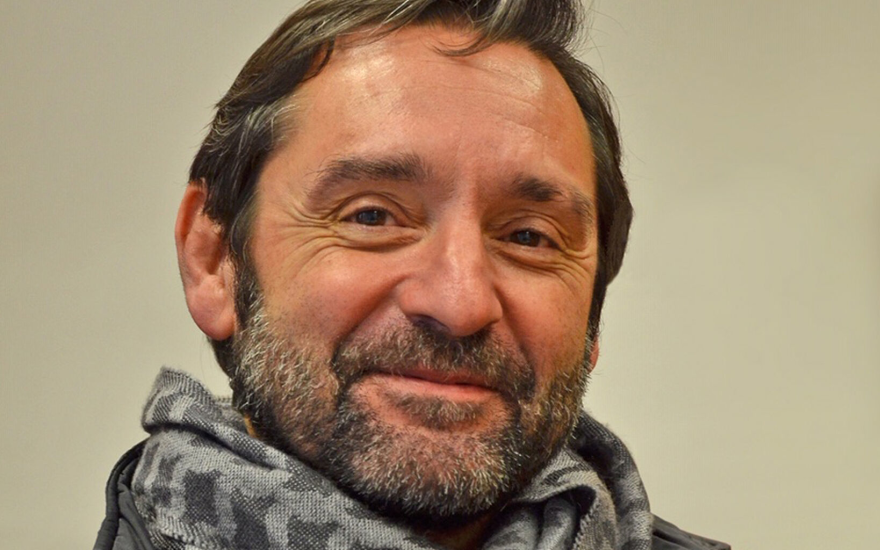
The appointment became official following its approval by the Governing Council on Tuesday 8 April.
His joining the Basque National Orchestra represents the return of a talent who has been trained and experienced in managing renowned musical entities.
Roberto Ugarte Alvarado will return home, to Euskadi, to take the lead of the Basque National Orchestra after more than 20 years directing or forming part of the most important musical institutions in Spain. The Board of Directors of the Basque National Orchestra will submit the resolution to appoint Ugarte as General Director to the Governing Council as the body responsible for adopting the appointment.
Ugarte, born in Vitoria-Gasteiz in 1962, is looking forward to this new stage in which he will attempt to position the Basque National Orchestra as a cultural point of reference in Europe. Roberto Ugarte will be taking over from Oriol Roch, who has led the Basque orchestra since 2014. The Board of Directors has expressed its gratitude for his work over recent years for the Basque National Orchestra.
His incorporation into the Basque National Orchestra represents the return of a talent who has been trained and experienced in the management of musical entities, now returning to the Basque Country with a consolidated career only possible due to years of hard work. Roberto Ugarte is excited and, at the same time, eager to contribute to an orchestra he seeks to continue developing artistically while maintaining its prestige. It is worth noting that the Basque National Orchestra continues to be the cultural institution in the Basque Country with the highest number of subscribers to its concerts.
Once the appointment has been approved by the Governing Council, the new director will officially join the orchestra in May.
Roberto Ugarte
Roberto Ugarte is a musician who specialises in the guitar. Throughout his life he has worked as a pianist, guitarist, accompanist, singer in different Renaissance and Baroque music groups, a teacher and choir conductor. The last twenty years have seen him acting more in a management and artistic role as director of major musical entities.
He began his career at the Jesús Guridi Conservatory in Vitoria-Gasteiz, where he studied piano and guitar. In 1995 he was appointed director of the recently created Luis Arámburu Municipal School of Music in Vitoria-Gasteiz, where the number of students, teaching staff and specialities taught increased exponentially, making it a point of reference in the Basque Autonomous Community. He was a member of the board of directors of the Association of Music Schools of the Basque Country from 1998 to 2001. He has worked as Artistic Coordinator of the Gran Canaria Philharmonic Orchestra (2001); manager of the Madrid Orchestra and Choir Foundation (2009); Member of the Board of Directors of the Spanish Association of Symphony Orchestras (AEOS), as secretary, member and vice-president (2015 - 2018).
In February 2020 and until 2023, he was the Artistic Director and Manager of the Scherzo Foundation, being responsible for organising the prestigious Cycle Of Great Performers of the Scherzo Foundation, which brings together the most important pianists on the international scene at the National Music Auditorium in Madrid. Since 2020 he has held the position of Manager of the City of Granada Orchestra.
The Board of Directors has agreed to submit to the Governing Council his candidacy for the general management of the Basque National Orchestra.
New stage
This renewal is part of the end of a cycle and the beginning of a new one, which should offer new perspectives to the Basque National Orchestra project, so that the orchestra can continue to grow and expand its professional career.